Ceiling Fans for High Ceilings: The Complete Guide to Choosing, Installing, and Maximizing Airflow
High ceiling ceiling fans are not merely ornamental fixtures but necessary mechanisms to enhance comfort, air circulation and energy efficiency in high-rise areas. The high or vaulted ceiling of homes, offices, churches, halls, and...

High ceiling ceiling fans are not merely ornamental fixtures but necessary mechanisms to enhance comfort, air circulation and energy efficiency in high-rise areas. The high or vaulted ceiling of homes, offices, churches, halls, and modern architectural designs may make the spaces very uncomfortable and ineffective without the appropriate ceiling fan.
This complete guide has all the details you need to know about a high ceiling ceiling fan, how to select the correct ceiling fan, the right sizes, downrod lengths, and installation, costs as well as the professional ideas and advice to assist you in making the right choice.
The need to have special ceiling fans in High Ceilings.
The tall ceilings pose special airflow problems that cannot always be addressed using regular ceiling fans. Due to the natural Laws of Thermodynamics, tall rooms tend to keep the heat closer to the ceiling than to the floor. It causes a lack of equilibrium in temperature and comfort without the circulation of air.
Ceiling fans have important advantages in High Ceilings.
Placing the appropriate ceiling fan in a room with a high ceiling would have a number of benefits:
- Better air circulation: Huge fans circulate the air adequately in tall rooms.
- Use of energy: Fans will decrease the dependence on air conditioning and heating.
- Increased comfort: Even air circulation gets rid of hot and cold spots.
- Fashionable outlook: The giant fans are an addition to modern architecture.
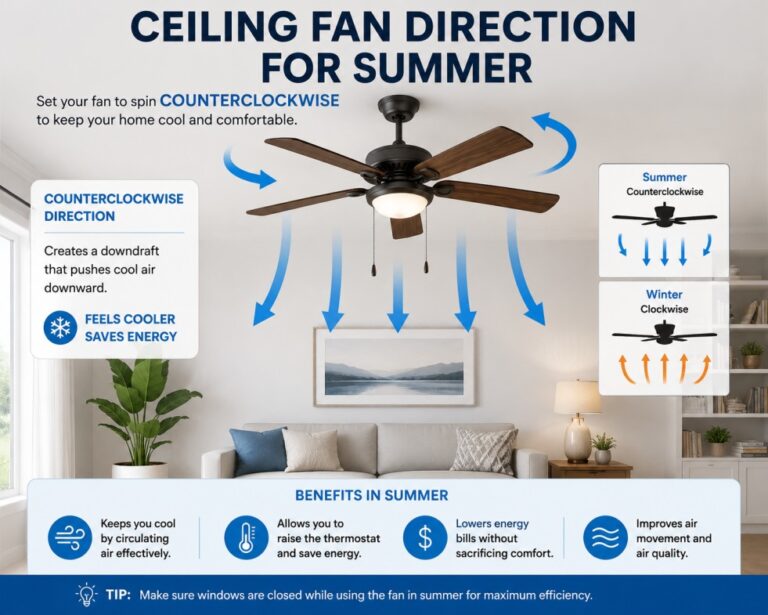
- All year round utility: Fans can be utilized during summer and winter.
Ceiling fans can be used to convert high-ceiling spaces into cozy and energy efficient space when appropriately chosen and installed.
Ceiling Height and Fan Placement.
The first thing to do before purchasing a ceiling fan is to know your ceiling height and the influence it has on the location of fans.
Hight of Recommended Fan above the Floors.
Ceiling fans must be placed at the appropriate height:
- Floor to fan minimum distance: 7 feet.
- Perfect height of blade off the floor: 89 feet.
- Maximum distance to ceiling: 10 12 inches.
Fans in large rooms (10 feet and above) should be lowered with the help of downrods to attain optimal air circulation.
High ceiling Downrod Length Guide.
It consists of a metal pipe which runs downward with the fan underneath the ceiling. High ceilings are important since the fan is put in its appropriate position.
| Ceiling Height | Recommended Downrod Length |
| 9 feet | 6 inches |
| 10 feet | 12 inches |
| 12 feet | 24 inches |
| 14 feet | 36 inches |
| 16 feet | 48 inches |
| 18+ feet | 60 inches or more |
Selecting the correct downrod will guarantee the highest airflow, wobbling, and good fan efficiency.
The Size of the Right Ceiling Fan on High Ceilings.
The size of the fans forms a significant part of the effectiveness of the flow of air. Tall rooms are usually suited with larger fans.
Ceiling Fan Size Chart
| Room Size | Recommended Fan Size |
| Up to 75 sq ft | 29–36 inches |
| 75–144 sq ft | 36–42 inches |
| 144–225 sq ft | 44–50 inches |
| 225–400 sq ft | 52–60 inches |
| 400+ sq ft | 60–72 inches |
In high ceilings, fans measuring 52 to 72 inches are normally suggested particularly in big or open plan areas.
Types of Ceiling Fans for High Ceilings
There are variable forms of ceiling fans that are made to fit tall spaces. The selection of the correct type of type is based on the size of the room, the height of the ceiling and its use.
1. Big-Diameter Residential ceiling fans.
The fans are suitably placed in living rooms, bedrooms and high ceiling open plan houses. They are very strong in airflow and at the same time stylish looking.
2. High Volume, Low Speed (HVLS) Fans.
The HVLS fans are built with extremely high ceiling (15-40 feet). They are typically employed in warehouses, gyms, churches, as well as in large halls. These fans circulate large quantities of air in low speed and are therefore, energy efficient and quiet.
3. Smart Ceiling Fans
The remote controls, smartphones, or smart home systems can be used to control smart fans. They come in handy especially in ceilings that are very high and where the use of manual control is inconvenient.
4. Outdoor Ceiling Fans
The purpose of outdoor fans is patios, verandas and covered outdoor surroundings with high ceilings. They are constructed using materials that are weather-resistance.
5. Decorative or Designer Fans
They are functional and are aesthetically oriented, and they are common in luxurious homes where there are vaulted ceilings.
Key Features to Look for in Ceiling Fans for High Ceilings
The major characteristics to consider when buying the ceiling fans of high ceiling.
To use a ceiling fan in a tall space, the following features are to be taken into consideration:
1. Powerful Motor
DC motors in the fans are less noisy, more economical, and fit in a large area.
2. High Airflow Rating (CFM)
Airflow is measured in cubic feet per minute (CFM). With high ceilings, the fans should be of high CFM to maintain the circulation of air.
3. Long Downrod Compatibility
Make sure that the fan can hold long down aprons in case of tall ceiling.
4. Blade Design and Material
The blades are made using aerodynamic blades made of metal, ABS or quality wood to enhance durability and the ease of air movement.
5. Smart Capabilities or Remote Control.
High ceilings are the areas that need remote controls because wall switches might not be very convenient.
6. Stability and Build Quality
Good quality construction minimizes wobbling and noise which are major problems in tall installations.
Installation Hints of Ceiling Fans in High ceilings.
Ceiling fans that are installed in high ceilings are not always simple and would demand planning and professionalism.
Installation Overview Process.
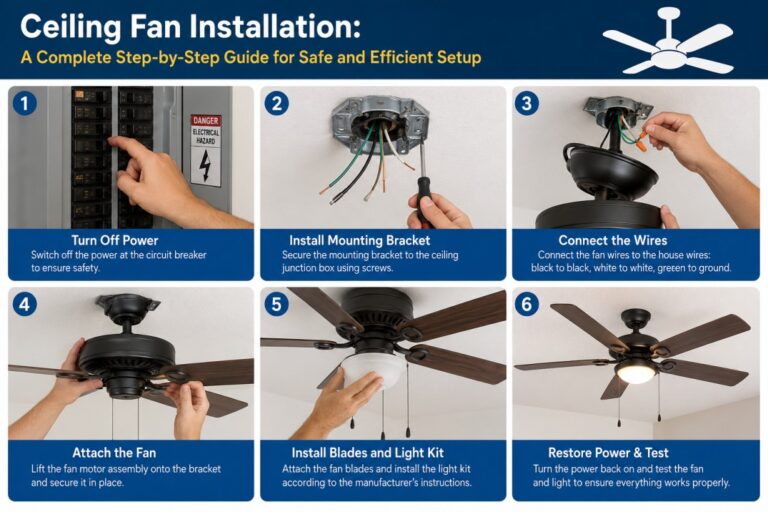
- Switch off power at circuit breaker.
- Fit a fan rated electric box that is able to hold the weight of the fan.
- Fasten the mounting bracket.
- Install the downrod and fan motor assembly.
- Attach wiring as per instructions of manufactures.
- Install fans and accessories.
- Check the fan with regards to stability, speed, and noise.
Professional installation is commonly suggested due to height and complexity since it is safer and grants optimum performance.
Common Mistakes to Avoid
A big number of house owners make error when using or installing ceiling fans to high ceiling. Avoid these common errors:
1. Choosing the Wrong Fan Size
Tall rooms cannot circulate air successfully through small fans.
2. Making a mistake with the Wrong Downrod Length.
Ceiling mounted fans are ineffective.
3. Ignoring Ceiling Slope
Angled mounting kits are needed in vaulted ceilings.
4. Standard Electrical Boxes may be used.
Electrical boxes with high ceilings are recommended to have fan rated boxes.
5. Skipping Remote Controls
To use it manually is not feasible in high areas.
These are the mistakes to avoid so that the performance will be improved and the fans will last longer.
Ceiling Fans vs Alternatives to High ceiling coolers.
| Feature | Ceiling Fans | Air Conditioning |
| Installation Cost | Low to Moderate | High |
| Energy Consumption | Low | High |
| Maintenance | Minimal | Frequent |
| Cooling Effect | Air circulation | Temperature reduction |
Ceiling fans are most effective used in conjunction with air conditioning and they save energy and help to enhance comfort.
Prices of Ceiling Fans with High Ceilings.
Ceiling fans of high ceiling cost will differ according to size, features, and the nature of installation.
Average Price Range
- Standard large ceiling fan: $80 – $300
- Premium or smart fan: $300 – $800
- HVLS industrial fan: $1,000 – $5,000+
- Installation cost: $150 – $400+
Factors Affecting Cost
- Fan size and brand
- Downrod length
- Ceiling height
- Wiring requirements
- Installation complexity
Even though high-quality fans might be expensive in the short-run, they are better performing and save more energy in the long-run.
Fan Maintenance of High Ceiling Fans.
Special care should be taken when maintaining ceiling fans in high places.
- Wash blades on a regular basis with extendable dusters.
- &check screws and mounts on an annual basis.
- Shake blades in case of wobbling.
- Lubrication of motors should be done when necessary.
- Periodically change batteries in remote control.
The maintenance is performed regularly to make sure that the performance of the fan is efficient and the lifespan of the fan is increased.
Frequently Asked Questions (FAQ)
1. Which is the most appropriate size of ceiling fans in high ceilings?
Fans with large ceilings such as 52 to 72 inches are used in large rooms mostly in high ceilings.
2. What is the length of the downrod to use on a 12-foot ceiling?
The downrod that is recommended is 24 inches when the ceiling is 12 feet.
3. Installing a ceiling in a vaulted ceiling?
Yes, however, possibly an angled mounting kit might be required and installation is required by a professional.
4. Can industrial fans be installed in high ceilings of residential buildings?
Yes, particularly to large open plan houses and lofts with a really high ceiling.
5. Are the ceiling fans effective in high rooms?
Yes, installed at the right size, at the right height, they make a huge difference to the air flow and comfort.
Conclusions: Selecting the best high-ceiling ceiling fan.
High ceiling fans are important in the establishment of comfortable, energy-saving, and aesthetically pleasing areas. With the appropriate fan size, length of the downrod, and the features, you will be able to maximize the airflow and minimize the energy expenditure in tall rooms.
Whether it is a new house that would be designed, a business remodeling or remodeling a room with a high ceiling; an investment into the correct ceiling fan would provide one with long-term returns in terms of comfort, style, and efficiency.
Ceiling fans are capable of turning elevated areas into habitable and well-ventilated areas in the coming years with a proper planning, installation, and maintenance.